
“My Son Will Become Whatever He Wants”: Zverev’s US Open Triumph Built on His Mother’s Courage
97 Repoter: 97 Admin
Publish : 1 hour agoUpdate: 1 second ago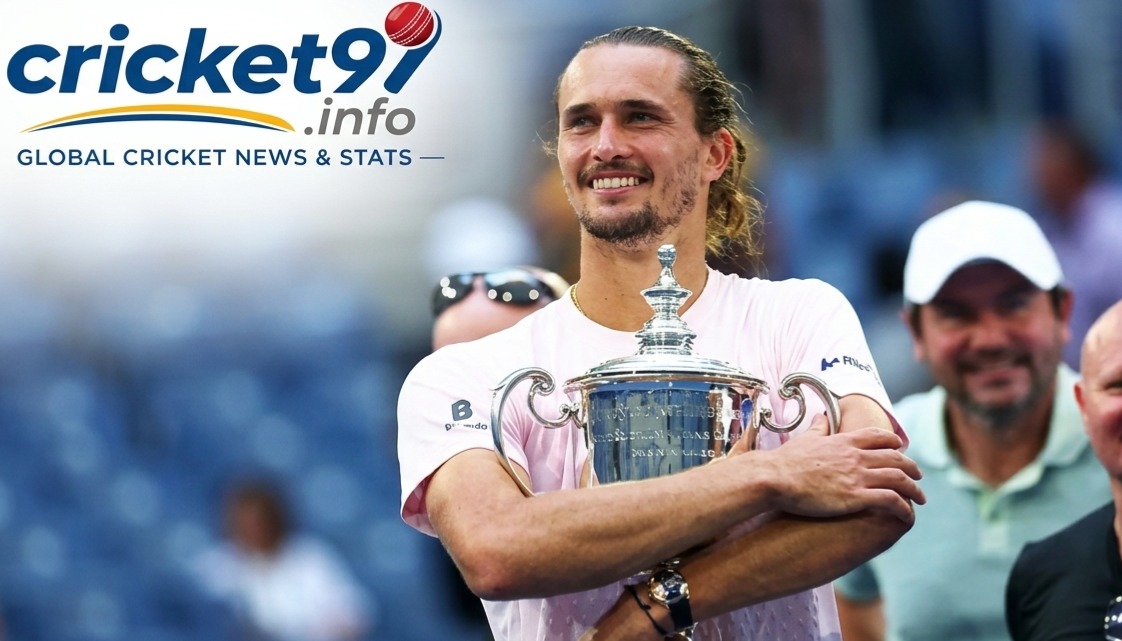
“My Son Will Become Whatever He Wants”: Zverev’s US Open Triumph Built on His Mother’s Courage
“My Son Will Become Whatever He Wants”: Zverev’s US Open Triumph Built on His Mother’s Courage
Some Grand Slam trophies mean far more than a title. They carry years of struggle, painful memories, family sacrifices and battles that cannot always be seen on a tennis court. For Alexander Zverev, his US Open triumph was exactly that kind of victory.
Zverev defeated Ben Shelton 6–3, 7–6 (2), 5–7, 6–2 to win the first US Open title of his career. The victory also erased a painful memory from the same court six years ago, when he led Dominic Thiem by two sets before eventually losing in a fifth-set tiebreak.
This time, history did not repeat itself.
During his trophy speech, Zverev thanked someone who never watches his matches but remains, in his words, the most important person in both his tennis career and personal life—his mother, Irina Zverev.
The German star struggled to speak through his emotions before recalling the difficult period of his childhood.
Zverev was diagnosed with Type 1 diabetes when he was just four years old. Doctors warned his family that the condition could significantly affect his lifestyle and future in sport.
His mother, however, refused to accept that diagnosis as a limit on her son’s dreams.
“My son will become whatever he wants,” was the belief Irina carried with her while raising Alexander. Zverev said it took an incredibly strong mother to walk out of the doctor’s office believing that her son could still become anything he wanted.
The early years were extremely difficult. Zverev’s parents had to wake him three times every night to check his blood sugar and administer insulin. Night after night, they worked to learn how to manage his condition while allowing him to grow up, play sports and dream like any other child.
Zverev never stopped dreaming.
Today, he travels with a special phone that has no SIM card or mobile network connection. It connects via Bluetooth to the continuous glucose monitor attached to his body. During matches, he can check his blood sugar levels on the screen and see whether they are rising or falling. When necessary, he takes insulin.
Zverev once described playing tennis with diabetes as “playing two matches at the same time”—one against his opponent and another against his own body.
That battle was visible again in the US Open final.
After winning the opening two sets, Zverev saw Shelton fight back by taking the third 7–5. The American also began receiving overwhelming support from the crowd. For a moment, it appeared that Zverev might be heading toward another painful collapse similar to the one he experienced six years earlier.
But this time, he refused to break.
Zverev quickly secured a break in the fourth set and closed it out 6–2 to claim his second Grand Slam title and his first US Open crown.
The victory also added another chapter to German tennis history. Zverev became only the second German after Boris Becker to win both Roland Garros and the US Open in the same year.
As he lifted the trophy, Zverev may well have remembered the four-year-old boy he once was, the sleepless nights his parents endured and the words his mother gave him as a source of strength:
“My son will become whatever he wants.”
Inside Arthur Ashe Stadium, the crowd erupted in celebration. Zverev held the trophy while his father, Alexander Zverev Sr., watched from the stands with tears in his eyes.
Because this victory was about more than a Grand Slam title. It was a victory for a mother’s belief, a family’s years of sacrifice and a battle against an opponent that never held a racket but had to be defeated every single day—his own body.
When a mother believes in her son, perhaps no dream is impossible.