
No Messi or Ronaldo, yet the intensity of El Clásico remains undiminished: 5 key battles to watch
97 Repoter: 97 Admin
Publish : 1 hour agoUpdate: 3 minutes ago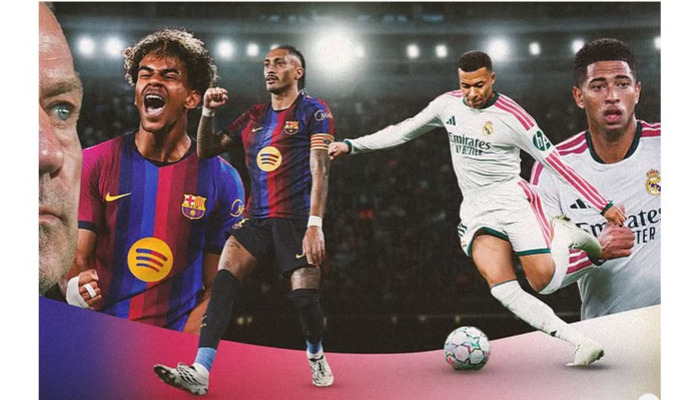
No Messi or Ronaldo, yet the intensity of El Clásico remains undiminished: 5 key battles to watch
No Messi or Ronaldo, yet the intensity of El Clásico remains undiminished: 5 key battles to watch
Times change, and so do the heroes of football. There was a time when *El Clásico* was synonymous with the duel between Lionel Messi and Cristiano Ronaldo. The magic of Messi’s left foot, the blistering pace of Ronaldo, and the tactical battles between Pep Guardiola and José Mourinho on the sidelines—this grand spectacle effectively split the footballing world into two camps.
That era has given way to a new generation. A fresh narrative of rivalry is emerging, centered around Barcelona’s Lamine Yamal and Real Madrid’s Kylian Mbappé. While their personal duel has yet to develop a long history, the intensity surrounding *El Clásico* remains undiminished.
Tomorrow night, Barcelona and Real Madrid are set to face off at the Camp Nou. Barcelona currently leads La Liga with 27 points from 9 matches, while Real Madrid sits in third place with 21 points from the same number of games. A defeat in this match could see the gap between the two sides in the title race widen to 9 points.
For Hansi Flick, this presents an opportunity to push his rivals further back. Conversely, Real Madrid faces the challenge of closing the gap to keep the title race competitive.
Ahead of this major clash, here are five key talking points:
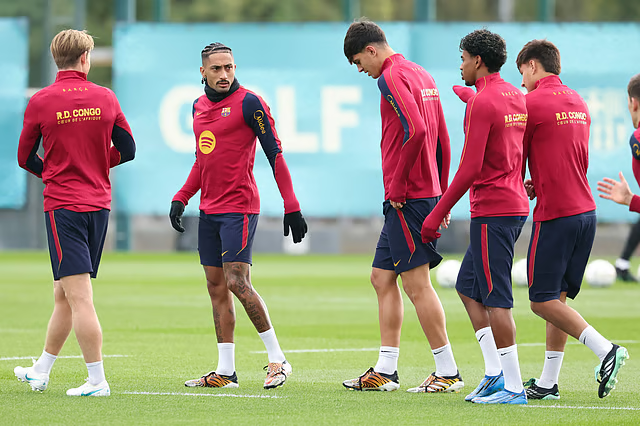
1. Does the key to victory lie with Raphinha?
Statistics sometimes offer a glimpse into how a football match might unfold, and this certainly seems to be the case with Raphinha. Barcelona has won every one of the last six *El Clásico* matches in which the Brazilian star has featured. In those games, Raphinha has scored 7 goals and provided 3 assists.
He is in sensational form this season as well, having netted 14 goals across all competitions in just 10 matches. In the league, he currently tops the scoring charts with 12 goals in 8 appearances.
After recovering from an injury, Raphinha made his return in the Champions League match against Paris Saint-Germain. Although Barcelona lost that encounter, the Brazilian star’s confidence remains unshaken. He believes that this defeat will have no impact on their performance in El Clásico.
Raphinha’s past record against Real Madrid, combined with his current form, offers a major glimmer of hope for Barcelona. If he hits his stride, the opposition’s defense could face a stern test.
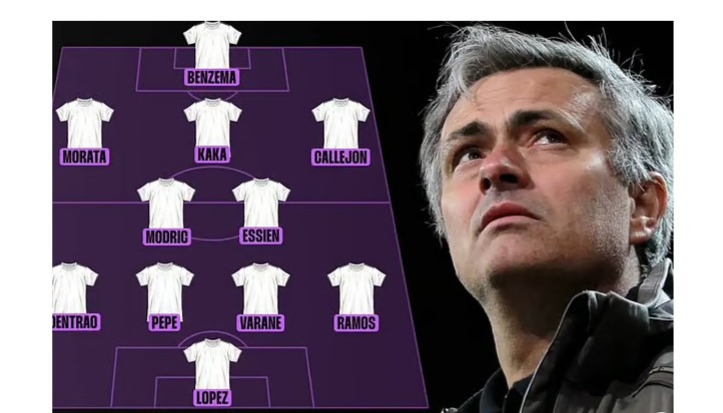
2. Will the ‘old’ Mourinho return?
In the history of football, the relationship between José Mourinho and Barcelona has been nothing short of dramatic. The Portuguese coach once served as an assistant coach at Barcelona, only to later become one of the club’s fiercest rivals upon taking charge of Real Madrid.
Football fans still remember the controversial incident from the 2011 Spanish Super Cup, when Mourinho poked his finger into the eye of Tito Vilanova—Barcelona’s assistant coach at the time. That event remains a notorious chapter in the bitter rivalry between the two sides.
Now, Mourinho is back in the Real Madrid dugout. This marks his first El Clásico of his second stint. While his demeanor may have mellowed somewhat with age, his tactical approach and competitive spirit in high-stakes matches will once again be a major talking point.
During his first spell as Real Madrid manager, Mourinho oversaw 17 El Clásicos, recording 5 wins, 6 draws, and 6 defeats. Before leaving the club in 2013, he remained unbeaten in five consecutive Clásicos—a streak he now has the chance to extend to six matches.
On the other hand, Barcelona manager Hansi Flick also boasts an impressive record, having secured six wins in seven matches. Consequently, the tactical acumen, experience, and ability to handle pressure shown by both managers could prove decisive.
3. Will Camp Nou become a nightmare for Real Madrid?
Barcelona’s recent form at home serves as a stern warning to their opponents. The team is currently on a 23-match winning streak in league games played on their own turf. Last season, they won all 19 of their home league matches, and they have emerged victorious in each of their first four home games this season.
Barcelona has also been prolific in front of goal when playing at home. This season, the team has scored 22 goals in five matches there—averaging more than four goals per game.
On the other hand, Real Madrid’s recent away form has been somewhat inconsistent. In their last four away league matches, they have recorded two wins and two defeats—losing to Real Betis and Atlético Madrid, while securing victories against Espanyol and Elche.
However, history suggests that Real Madrid should not be written off when playing at the Camp Nou. In their last six league visits to Barcelona’s home ground, the Madrid side has emerged victorious three times—a significant improvement considering they had managed only three wins in the 16 encounters prior to that.
In short, while Barcelona is formidable at home, Real Madrid knows how to find a path to victory there.
4. Is Barcelona’s defense truly secure?
Barcelona’s attacking prowess is striking; the team has netted 50 goals in 12 matches. Before their 4-2 defeat to PSG, Hansi Flick’s side had won 11 consecutive matches.
Yet, the Parisian club demonstrated that Barcelona’s attacking style of play is not without its vulnerabilities. Flick’s high-pressing strategy forces opponents to lose possession quickly. In the league, Barcelona has conceded an average of only 6.8 shots per match—a testament to the strength of their defensive organization.
However, the picture changes when looking at the quality of the shots conceded. According to the statistics, Barcelona has the highest 'Expected Goals' (xG) value per shot conceded in the league. This means that while they may limit the total number of shots allowed, the opportunities they do concede can be highly dangerous.
The absence of Jules Koundé due to injury also raises questions about Barcelona’s defense—an opening that attacking players like Kylian Mbappé and Yan Diomandé could potentially exploit.
5. Will Real Madrid feel the absence of Vinícius?
The absence of a key player in a major match is always a cause for concern. Even though Vinícius Júnior is unavailable due to a suspension, Real Madrid has no shortage of alternatives in their attack.
Yann Diomandé may take on added responsibility in Vinícius's absence. All three of Real Madrid's goals against Sevilla originated from the left flank. Diomandé has also demonstrated his capabilities by contributing both goals and assists in matches against Sevilla and Leipzig.
And then there is Kylian Mbappé. The French star has scored six goals in six matches against Barcelona—averaging one goal every 75 minutes. His pace, clinical finishing, and effectiveness on the counter-attack could put Barcelona’s defense under significant pressure.
Jude Bellingham’s statistics are also promising for Real Madrid. In six *El Clásico* encounters, he has recorded four goals and two assists—three of which were match-winning contributions.
Consequently, while the absence of Vinícius is a major blow for Real Madrid, the presence of players like Mbappé and Bellingham is more than enough to pose a serious challenge for Barcelona.
Even in terms of history, the two sides are evenly matched.
The rivalry of *El Clásico* extends beyond current form or individual player performances; the long, shared history between the two clubs adds a unique dimension to the fixture.
According to the statistics, both teams have secured 106 victories each, with 52 matches ending in a draw. Real Madrid holds a slight edge in total goals scored, with 444 compared to Barcelona’s 441.
Barcelona has now equaled the record for the best start to a league season—nine consecutive wins—a feat previously set by Miguel Muñoz’s Real Madrid side in the 1968–69 season. A win in this match would allow them to claim the record outright.
On one hand, there is the challenge for Mourinho to leave his mark on this historic rivalry; on the other, Flick has the opportunity to further solidify Barcelona’s dominance.
Messi is gone, and so is Ronaldo. Yet, the intensity of *El Clásico* remains undiminished. Players change, coaches come and go, and eras shift—but the enduring allure of the duel between Barcelona and Real Madrid never fades.