
Joint List Ready to Help Oust Netanyahu as Arab Parties Gain Influence
97 Repoter: 97 Admin
Publish : 2 hours agoUpdate: 25 minutes ago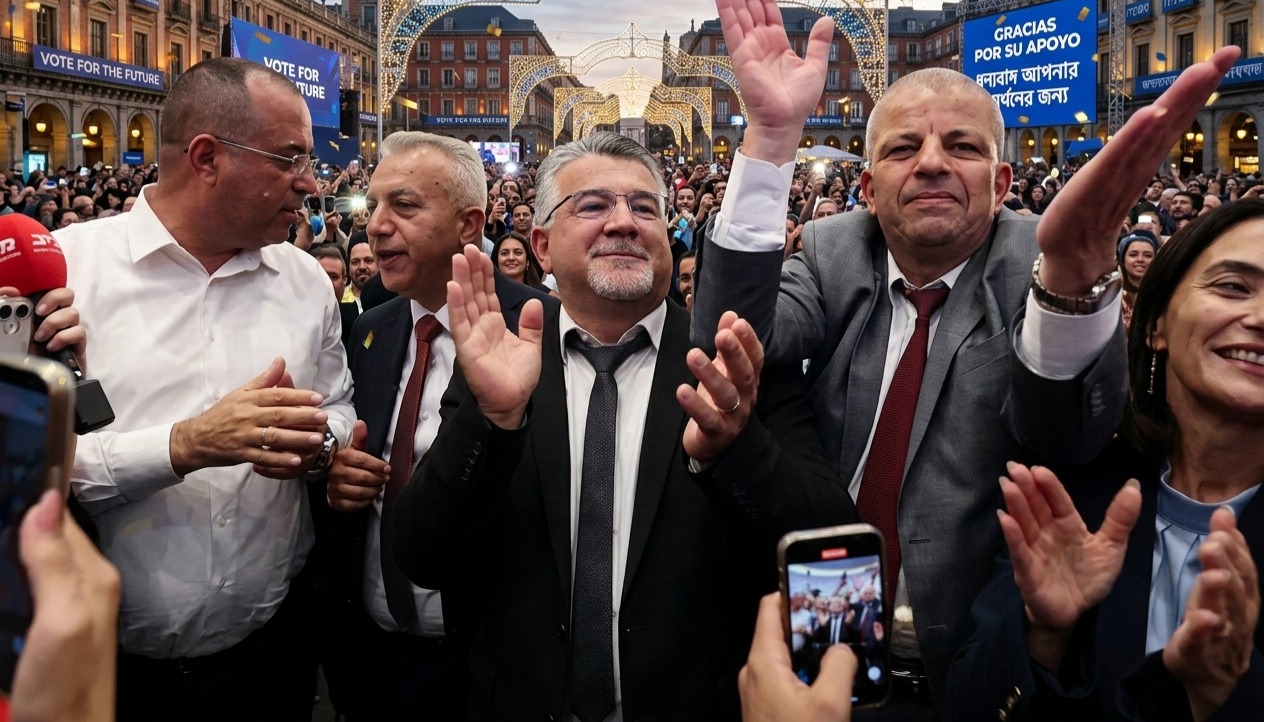
Joint List Ready to Help Oust Netanyahu as Arab Parties Gain Influence
Joint List Ready to Help Oust Netanyahu as Arab Parties Gain Influence
The Joint List is prepared to help create a political path to remove Israeli Prime Minister Benjamin Netanyahu's government, party chairman Yousef Jabareen has said, as Arab-led parties emerge as potentially important players in the country's post-election coalition talks.
Jabareen said parties seeking to replace Netanyahu would have to engage with the Joint List. His comments came as partial election results showed Arab-led parties making significant gains, while neither of the two main blocs appeared capable of reaching the 61 seats required for a majority in the 120-member Knesset.
‘They Will Have to Talk to Us’
Speaking to Israel's Channel 13, Jabareen said parties seeking a genuine alternative to Netanyahu's government would need to negotiate with his faction in order to create a path toward political change.
In a separate interview with Ynet, he said the Joint List was prepared to use its political strength to advance its values and help create a path to remove the government led by Netanyahu, Itamar Ben-Gvir and Bezalel Smotrich.
Jabareen framed the choice as one between continuing what he described as racism, exclusion and political supremacy, or creating a genuine partnership between Jewish and Arab citizens.
Why Arab Parties Could Become Crucial
Israel's Knesset has 120 seats, meaning a government needs at least 61 seats to command a majority. Partial results showed that neither Netanyahu's bloc nor the opposition bloc led by former military chief Gadi Eisenkot had reached that threshold.
That has placed Arab-led parties in a potentially influential position. The Joint List and Ra'am together were projected at one point to win 19 seats, although the figures remain provisional as vote counting continues.
Eisenkot's opposition bloc cannot reach a parliamentary majority on its own, making possible cooperation with Arab parties an important part of the coalition debate.
However, such an alliance is far from certain. Several parties in the anti-Netanyahu camp had previously opposed forming a government with Arab-led parties, while Democrats leader Yair Golan has publicly called for cooperation with Arab parties.
Seat Projections Are Still Changing
The election results remain provisional, and the projected seat distribution has shifted as more ballots have been counted.
At different stages, Netanyahu's bloc has been projected at around 53-56 seats, while Eisenkot's bloc has ranged from 47 to 49. The combined projection for Arab-led parties has also fluctuated between 17 and 19 seats.
As a result, no final coalition outcome can yet be confirmed.
Speaker's Position Also Part of the Equation
Coalition negotiations could also affect the leadership of the Knesset. Israeli media have reported that the opposition camp is considering combining its seats with those of Arab parties to remove Knesset Speaker Amir Ohana, a member of Netanyahu's Likud party.
That possibility remains part of the broader political negotiations and depends on whether the opposition can reach an agreement with the Arab-led factions.
Historic Gains for Arab-Led Parties
The performance of Arab-led parties has become one of the defining features of the election. If the Joint List and Ra'am ultimately secure 19 seats between them, it would represent a historic result for Arab-majority parties in Israel. The previous high came in 2020, when the Joint List, then a broader alliance that included Ra'am, won 15 seats.
The result has therefore placed Yousef Jabareen and the Joint List at the centre of the debate over Israel's next government.
The key question now is whether the Arab-led parties will translate their electoral gains into an agreement capable of helping form a government without Netanyahu.